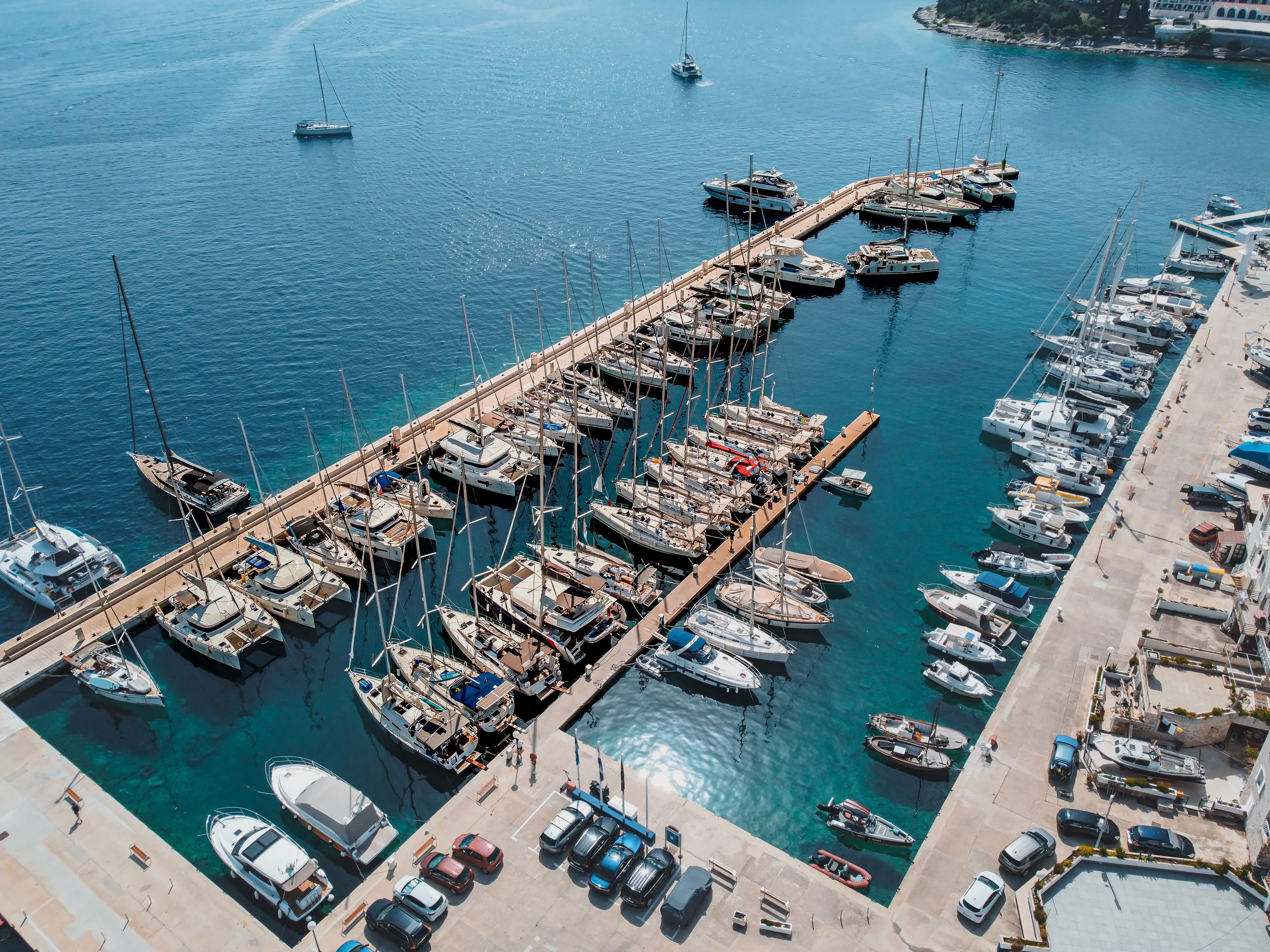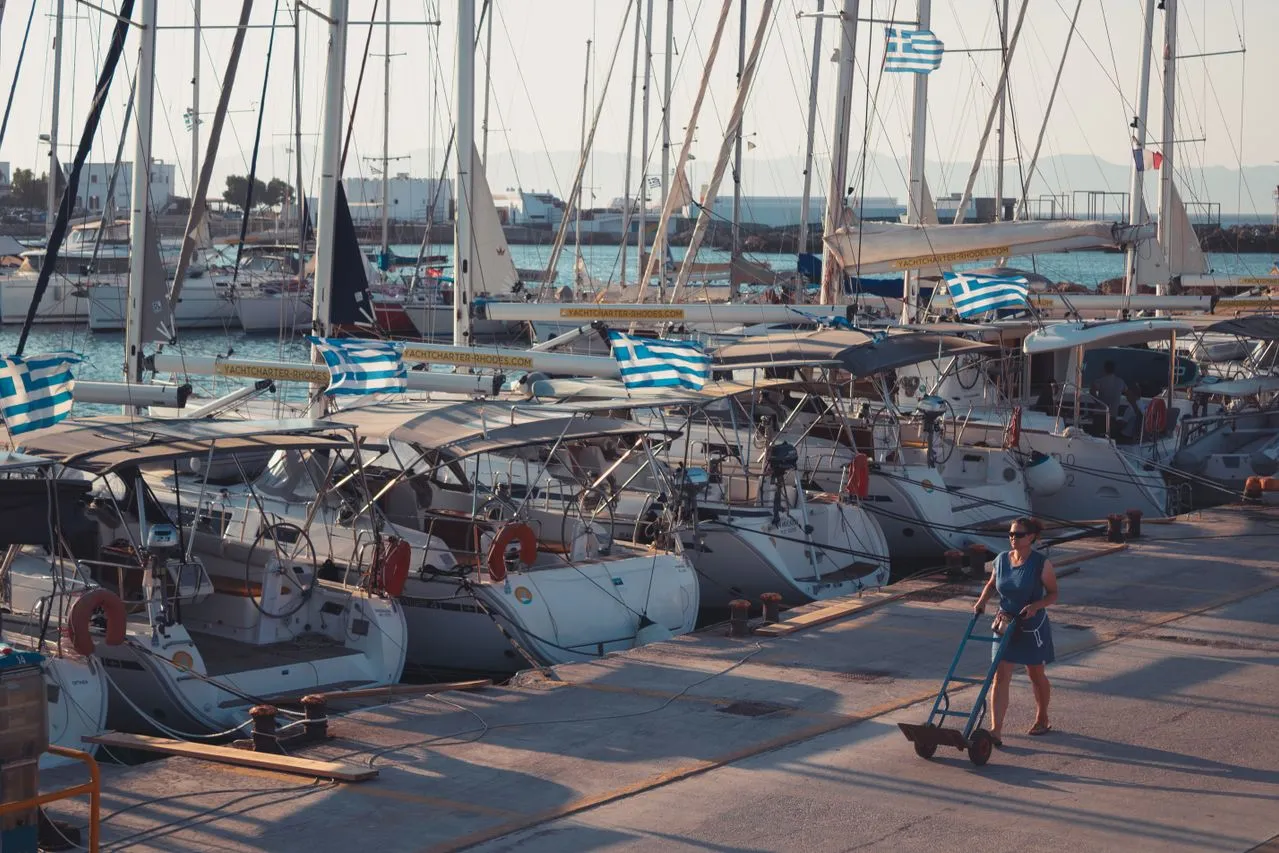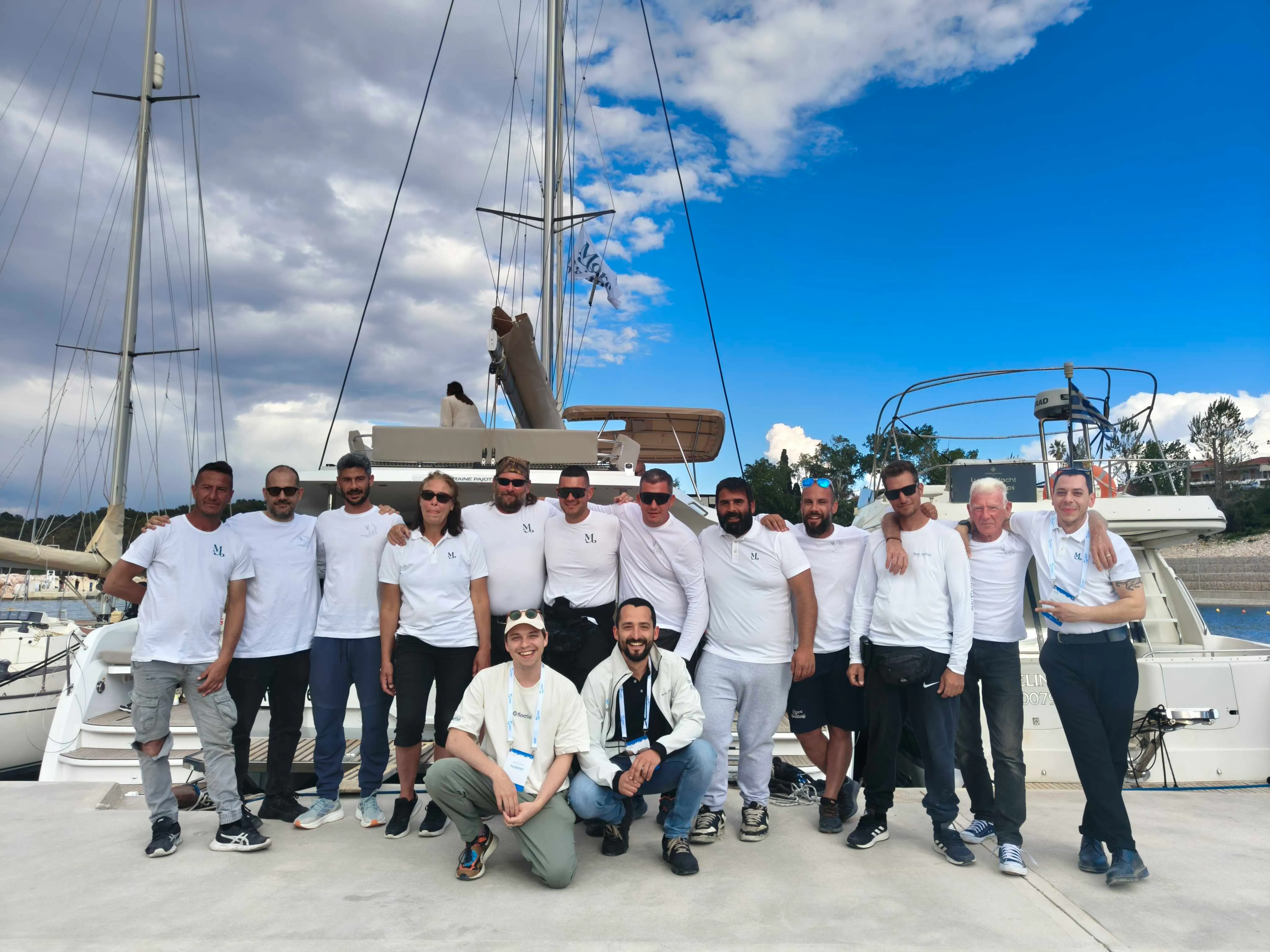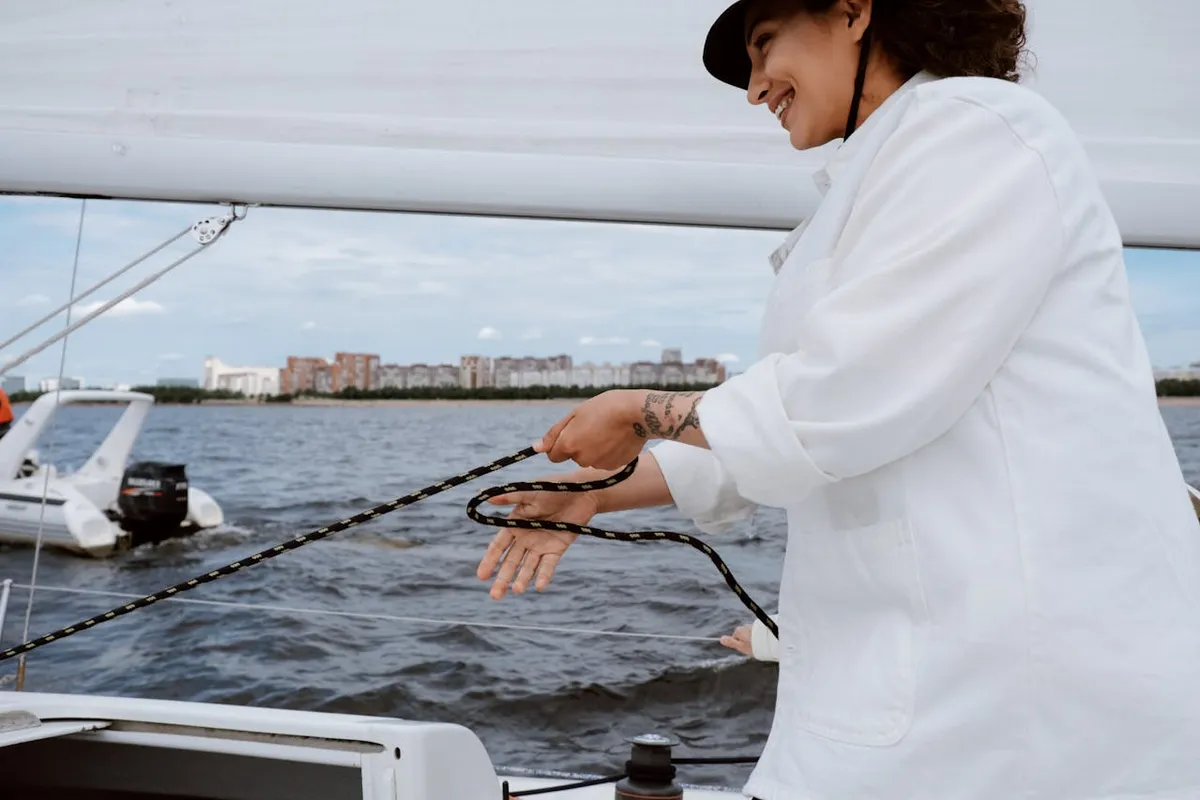
Wake up in a quiet cove somewhere in Croatia, make a strong coffee, and decide if you feel like sailing to a medieval town or finding a secluded beach. No tour guide, no itinerary, no other cruise passengers wondering if they can change the itinerary or annoy you somehow else. Just you, your friends, and the kind of freedom that makes office life feel like a distant memory. Sounds good? You are not alone.
That is the appeal of a bareboat charter. And with the yacht charter market now worth nearly $10 billion globally, clearly a lot of people have figured this out. The Mediterranean alone hosts over 90% of summer charters, with Croatia and Greece leading the way followed by Italy and Turkiye.
But before you start browsing boats, you need to understand what a bareboat charter actually is, what qualifications you need, and what it will cost you. Consider this your complete bareboat charter guide for 2026.
What Is a Bareboat Charter?
A bareboat charter is a rental model where you hire a (sailing) yacht without any crew or provisions included. You get the boat, the safety equipment, and not much else. The “bare” in bareboat means exactly that. You handle navigation, cooking, anchoring, docking, and everything in between but are also responsible for it.
Think of it like renting a holiday apartment versus staying at an all inclusive resort. More freedom, more privacy, usually cheaper per person, but also more responsibility. And no, Uber Eats is not yet available in your charter location but maybe a field worth exploring.
Bareboat vs Skippered vs Crewed Charters
In a bareboat charter, you are the skipper. You make every decision, from where to anchor to when to set sail. If the anchor drags at 2am or the weather turns, you are making the calls.
A skippered charter includes a professional captain who handles the sailing while you relax. Some people use this to learn, others just watch the scenery go by. Expect to pay €150 to €250 per day for a skipper in the Mediterranean.
A crewed charter is full luxury: captain, chef, and sometimes additional crew handle absolutely everything. You show up with your bags, they do the rest. You will feel kind of useless but will love it. These charters cost significantly more but deliver a completely different experience for your sailing holiday.
What You Actually Get
When you book a bareboat charter, you typically receive the yacht itself, basic safety equipment including life jackets and flares, navigation instruments and charts, a dinghy, bed linens and sometimes towels, mooring lines, fenders, and a full fuel tank which you return in the same condition.
Modern charter boats usually have GPS plotters, autopilot, VHF radio, and often wifi. Some extras like outboard engines for the dinghy, paddleboards, or snorkeling gear may be available for an additional cost. The boat comes equipped to sail. Everything else is on you.
Do I Need Qualifications to Bareboat Charter?
Short answer: yes, almost everywhere. Sorry, but it is important.
The most widely accepted qualification is the ICC (International Certificate of Competence). This is recognized across Europe and most of the world. If you have an RYA Day Skipper, ASA 104, or similar national license, you can usually convert it to an ICC without taking another exam.
Other commonly accepted qualifications include the RYA Coastal Skipper or Yachtmaster certificates from the UK, the IPC (International Proficiency Certificate) which is the American equivalent of the ICC, and various European national sailing licenses. Talk to your fleet operator or charter agent for more information.
Requirements by Destination
-
Croatia is one of the stricter countries and maintains an official list of accepted licenses. They also require a VHF radio license from at least one person on board. If your paperwork works in Croatia, it will probably work anywhere in Europe. Bareboat charter Croatia is where many people have their first experience, partly because the infrastructure is well established and the sailing conditions are generally forgiving. The Bora is a famous wind coming from the north-east.
-
Greece requires an ICC or equivalent, and importantly, Greek port police no longer accept RYA Day Skipper certificates on their own. Often you will need to convert it to an ICC (International Certificate of Competence) before setting sail. They also want at least one other competent crew member over 18, though this person does not need formal certification. Bareboat charters in Greece give you ancient history, good food, and officials who will absolutely check your papers. So make sure they are in order.
-
Italy and Spain accept most international licenses including the ICC. Larger yachts may require additional national qualifications, so always confirm with your charter company.
If you do not have any license at all or are not sure about requirements, you can hire a skipper for your first trip and learn alongside them. Many people do a skippered charter first, then bareboat on their next trip once they feel confident. Think of it as a two in one deal, learning and holidays while you can decide on the amount of gin tonics you want to drink.
The VHF Radio License
The mediterranean countries of Croatia and Italy require at least one person on board to hold a VHF radio operator license. This charter requirement is separate from your sailing license and covers marine radio communication. The requirement is strictly enforced in Croatia, with the coast guard inspecting yacht charter holiday makers regularly.
If you do not have one, you can complete a short online course through the RYA, ASA, or other national associations. It takes a few hours and costs around €50 to €100. Worth having for any bareboat charter, even in destinations where it is not legally required.
Knowing how to use the VHF properly could genuinely save your life one day, so it is not just paperwork. We heard about charter guests in Turkiye accidentally entering a military zone and that’s just one moment when you really should know how to answer a navi ship on comms.
How Much Does a Bareboat Charter Cost?
A week on a 40 foot boat starts at around €2,500 depending on season and location. Split that among 6 to 8 people and you are looking at a quite reasonable price per person for an accommodation that moves. Not bad for accommodation listed as 0m to the sea.
But the rate is not the whole story. Budget for provisions at €25 to €50 per person per day, depending on how much wine you want with lunch. Fuel typically runs €150 to €300 for a week of sailing with some motoring. Catamarans with twin engines will use more.
Marina fees add up quickly in popular destinations. In Croatia during peak season, a night in a marina can cost €100 to €200 for a 40 foot boat. Many sailors anchor in bays for free and only use marinas when they want shore power, hot showers, or a night out. This is called being sensible with money, or cheap, depending on who you ask.
Additional costs include local tourist taxes, end cleaning fees, optional extras like outboard engines or water toys, and the security deposit which typically ranges from €1,500 to €3,000.
Good rule of thumb: add 15 to 30 percent on top of the base charter rate for all the extras and fees.
What Happens on Check In Day?
Traditionally, charter guests usually check-in in the afternoon, typically from 2pm or 3pm onwards. You will sign contracts, pay any remaining balance and security deposit, then receive a full briefing on the yacht covering all systems and equipment.
The handover and inspection walks you through the boat to note any existing damage and can take around 3 hours total while modern yacht charter companies cut this time significantly and you are on the water faster.
Some charter companies now offer digital check-in and a guest app where you complete paperwork and watch briefing videos before arrival, cutting the base visit down to 45 - 60 minutes so you can be on the water faster.
For this, ask if the base runs on Floatist digital yacht management and provides a guest app. If your charter company offers this, take it. Ask your agent or booking company about the Floatist Badge, your first evening will thank you. You can check-in online for your flight, why not your boat?
What Are the Risks of Bareboat Chartering?
Renting a boat for your holiday via the bareboat charter option means taking full responsibility. As we said earlier, weather can change quickly, and you need the judgment to know when to stay in port and when conditions are fine. Navigation errors can lead to grounding. Equipment fails at the most inconvenient moments, usually when you are furthest from help.
Then there is financial liability. Security deposits cover minor damage, but serious incidents can exceed this amount. Most charter companies offer damage waiver insurance for an additional fee that reduces or eliminates your liability. It costs extra but it also means you can actually relax during your holiday instead of watching every approach to the dock like your retirement depends on it. Because technically, it might.
The good news is that most bareboat charters go smoothly and there are additional insurances you can choose from. Choose conditions appropriate for your experience, check weather forecasts regularly, and do not let your ego or peer pressure override caution. The sea does not care about your confidence or if you want to impress someone.
What to Pack for Bareboat Sailing
Storage on boats is limited, and hard suitcases are impractical. You will be the person everyone hates if you show up with a Samsonite. Bring soft bags that can be folded and stowed easily.
We also created a yacht charter packing list so you know exactly what to bring. However, essential clothing includes non-marking deck shoes or boat shoes, quick dry clothing and plenty of swimwear, a waterproof jacket, warm layers for cooler evenings because it gets cold on the water even in the Mediterranean, and sun protection including hats, quality sunglasses, and reef safe sunscreen (Nemo will thank you for that).
Documents you cannot forget:
- Sailing license and VHF license if required
- Passport valid for at least 6 months beyond your charter dates
- Booking confirmation with charter company contact details as well as proper insurance.
It’s not a document but for us we treat it like one. Seasickness medication! Even if you think you do not need it. Conditions can change, and being the experienced sailor who gets sick is not good if nobody else knows how to navigate into calmer waters.
Bring a headlamp for moving around the boat at night, a dry bag for electronics, and personal toiletries since boats have limited supplies and the next store can be some nautical miles away.
Best Destinations for Your First Bareboat Charter
For your first time bareboat charter, you want reliable weather, good infrastructure, moderate distances between anchorages, and well known waters.
Croatia has become the world’s most popular bareboat destination for a good reason. You will get over 1,000 islands, established charter bases, excellent marina infrastructure, generally predictable summer conditions and restaurant staff that are used to speaking over 5 different languages every evening. The Adriatic coast provides sheltered sailing with plenty of options when weather changes. It is busy in peak season, but busy also means help is never far away.
Greece wins over 26% of the global charter market. The Ionian islands on the west coast offer protected waters ideal for beginners, while the Cyclades and Saronic Gulf provide more challenge for experienced sailors. The Meltemi wind in the Aegean can be strong in summer, so choose your region based on your experience level.
The British Virgin Islands are often called the sailing capital of the Caribbean. Consistent trade winds, short distances between islands, and line of sight navigation make it forgiving for newer sailors. The charter industry here is well established and oriented toward bareboaters. Also, rum.
Türkiye offers excellent value with stunning coastline, ancient ruins tucked into remote bays, and a welcoming culture. The turquoise coast provides protected sailing and fewer crowds than Croatia or Greece in peak season.
Ready to Charter?
Before you embark on your first bareboat charter, make sure your qualifications meet the requirements for your destination. Budget realistically for the extras beyond the base rate. Choose a boat appropriate for your experience and crew size, and ask your charter agent or fleet operator if they use the Floatist guest app. Look for the Floatist Badge when booking. Your first evening on the water will thank you.