Most people hear the phrase “yacht charter” and immediately assume it belongs in the same category as private jets and Monaco penthouses. It sounds expensive before anyone even looks at the numbers.
The cost of a sailing holiday works differently from regular travel, and that changes the equation completely. A week on a sailboat in Greece or Croatia can cost less per person than a standard beach holiday once all costs are factored in. Hotels advertise room rates. Charters advertise the whole experience upfront. That difference alone often tricks people into thinking hotels are cheaper.
Spoiler: They usually aren’t.
The global yacht charter market reached $9.69 billion in 2026 according to Fortune Business Insights, representing an 8% annual growth. That growth is not coming from billionaires suddenly buying larger yachts. It’s coming from families, friend groups, and first-time travelers realizing charter holidays make more financial sense than they expected.
And once people try chartering once, many stop looking at hotels the same way. That’s why the yacht charter vs hotel comparison has become much more common over the last few years. Even if you are traveling alone. For this, make sure to check out flotillas and cabin charters.
What Hotels Don’t Show in the Headline Price
Hotels are very good at making vacations look affordable at first glance. You search for accommodation in Split or Lefkada and see a beachfront room for €150 a night. That feels manageable. Maybe even cheap compared to other Mediterranean destinations. Then the rest of the holiday costs start to add up.
You rent a car because staying in one place gets boring after two days. Then parking and gas costs extra. Boat tours cost extra. Beach rentals cost extra. Ferry tickets pile up surprisingly fast if you want to explore nearby islands.
The original room rate ends up being the smallest part of the total trip cost. A family of four staying a week in a decent Mediterranean hotel can easily spend €2,000 to €4,000 by the end of the holiday without doing anything especially luxurious.
Charter flips that structure around. The boat is the accommodation, the transport, and plenty of entertainment all at the same time. Charter costs can be split further if multiple families or friends join. In many cases, the sailing holiday cost ends up lower than a comparable resort stay.
Why Charter Feels More Expensive Than A Hotel or Resort
Part of the yacht charter vs hotel price comparison comes down to psychology. Hotels sell one room one night at a time. The number appears small because it excludes nearly everything else you’ll spend during the week.
The structure makes charter look expensive even when the final vacation budget says otherwise. Charter companies show the full boat price immediately. Seeing €4,000 for a yacht sounds intimidating until you truly understand the breakdown of costs. The overall cost of a yacht charter holiday can easily save money and make planning on a specific budget easier.
What Yacht Charter Actually Costs in 2026
In the yacht charter vs hotel comparison, prices vary depending on destination, season, boat type, and whether crew is included. But realistic Mediterranean pricing in 2026 looks roughly like this.
Bareboat Charter
A bareboat charter means you sail the boat yourself.
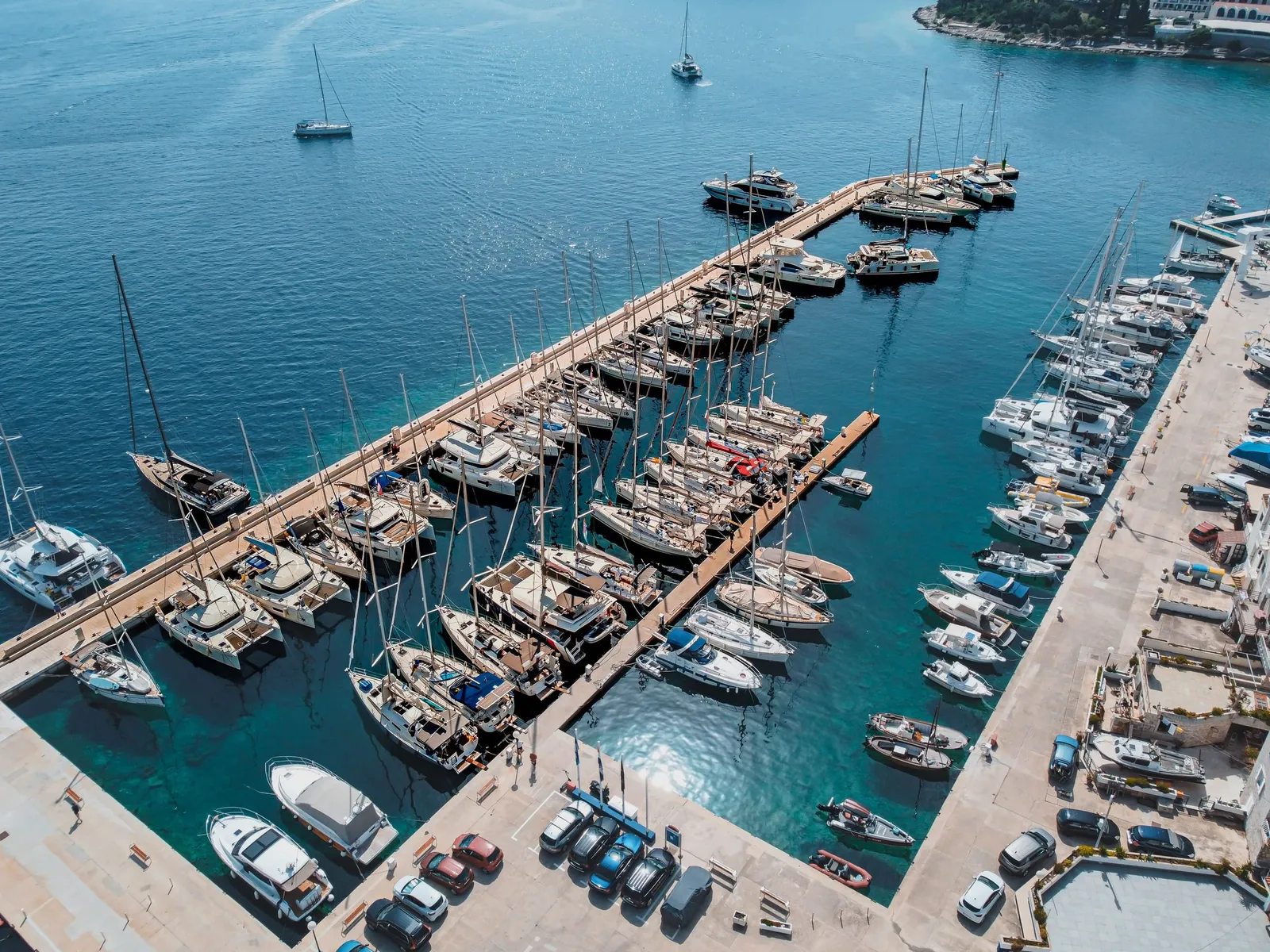
For monohulls around 35 to 42 feet in Greece or Croatia, shoulder season pricing typically ranges from €2,000 to €4,500 per week. July and August push those numbers closer to €4,000 to €7,000.
Catamarans cost more but also fit larger groups comfortably. A 40 to 45 foot catamaran usually falls between €4,000 and €8,000 in shoulder season, rising toward €12,000 during peak summer weeks.
Split a €4,000 catamaran between four couples and each couple pays €143 per night and is roughly what a sailing holiday costs.
For private accommodation that moves to a different island every day, that’s difficult to beat.
Skippered Charter
Adding a professional skipper generally costs €150 to €320 daily depending on experience and destination. For many first-time charter guests, this becomes the sweet spot.
You still get the sailing experience without worrying about docking in crowded marinas or navigating unfamiliar waters. The skipper handles route planning, mooring, local regulations, and usually knows exactly which bays stay calm when the afternoon wind builds.
The local knowledge alone changes the trip. According to Dream Yacht Sales, around 40% of charter guests are booking for the first time. Many have little or no sailing experience before arriving.
And honestly, they don’t need it.
Crewed Charter
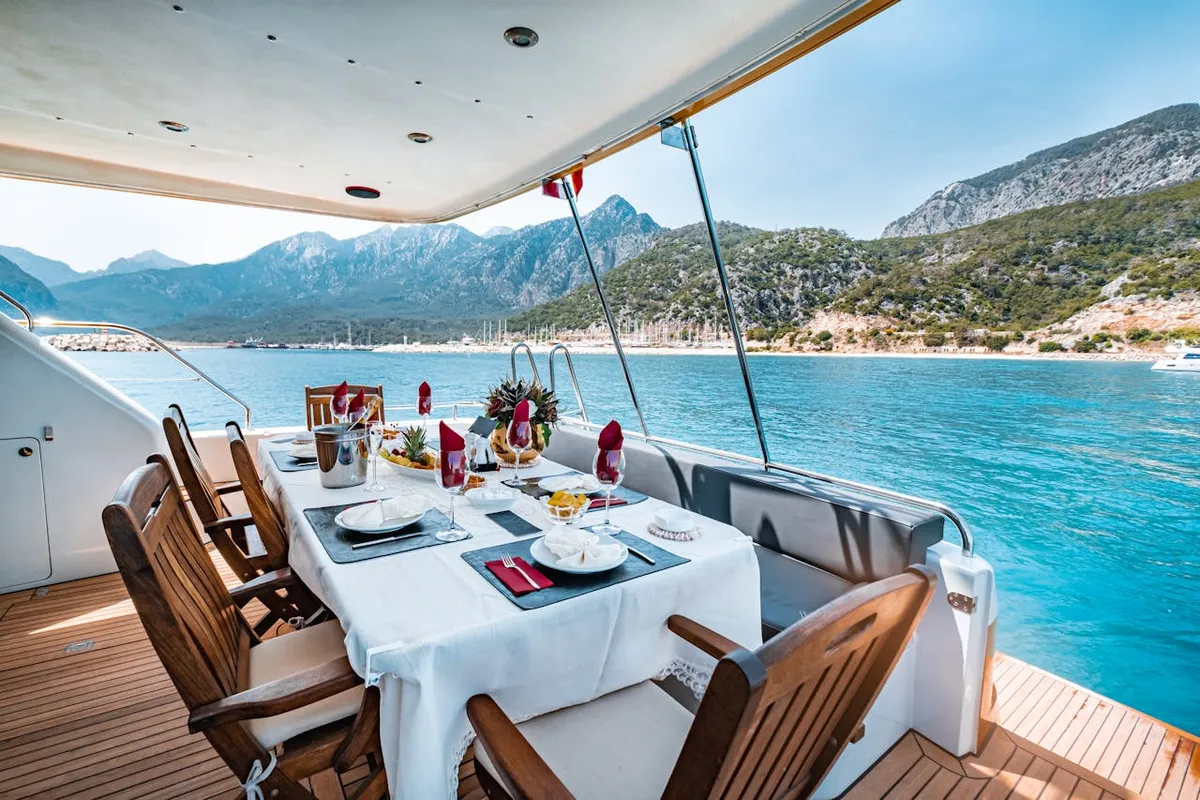
Getting a crewed charter is like staying at a luxury resort, but on the water. A fully crewed charter includes a skipper plus either a chef, hostess, or both. Meals are prepared onboard. Drinks are stocked. Water toys are ready to go whenever someone wants them.
Crewed catamarans in destinations like the British Virgin Islands typically start around $12,000 to $30,000 weekly.
That sounds enormous until you break down what’s included:
- private accommodation
- a professional crew
- all meals
- drinks
- water sports equipment
- fuel
- transport between islands
For 8 to 10 guests, that works out to roughly $220 to $535 per person per day.
Luxury resorts charge similar prices for a single room before activities and meals even enter the picture. This is where the charter vs resort comparison starts becoming surprisingly competitive.
What’s Included on a Charter
This is where the value gap becomes obvious.
Most bareboat charters already include:
- cabins and bathrooms
- kitchen equipment
- refrigeration
- towels and linens
- navigation equipment
- safety equipment
- access to anchorages that hotels simply cannot reach
Kayaks on a beach often rent for €30 to €50 an hour. Paddleboards cost similar amounts but your charter company can often offer you a good deal or includes it if you book early. Organized boat trips quickly climb into hundreds of euros for families.
A group spending actively during a hotel holiday can easily burn through €500 to €800 on activities already available for free onboard a charter boat.
Then there’s food. Cooking onboard changes vacation spending dramatically. A week of groceries for four people generally costs €200 to €400 depending on how much wine enters the equation.
Hotel dinners in Mediterranean tourist areas regularly hit €40 to €80 per person. Every single night.
Charter vs Resort: What Hotels Still Do Better
Hotels absolutely win in some categories.
Comfort and Simplicity
Air conditioning works constantly. Hot water never runs out. Beds get made for you. Someone replaces the towels. You don’t think about battery usage, water tanks, or weather forecasts before deciding where to sleep.
For travelers who want pure convenience with zero planning, hotels remain easier.
Reliable Internet
Hotels usually offer stable wifi. Boats sometimes don’t. Near shore, mobile data works reasonably well in much of the Mediterranean. Offshore or remote anchorages are another story entirely. Anyone planning to work remotely every day should think carefully about this.
Nowadays however, you can get a wifi pack that enables you better access in remote locations. Many people now use satellite internet and bring remote working into very remote locations.
No Learning Curve
Hotels require no orientation.
Charters involve safety briefings, boat systems, provisioning, and understanding how life onboard works. Even with a skipper, there’s still a small adjustment period during the first day or two. Some people love that adventure. Others don’t.
What a Sailboat Or Catamaran Charter Offers
This part is harder to quantify because it changes how the holiday feels rather than simply how much it costs.
Privacy on A Charter Yacht
A hotel room sits inside a building shared with hundreds of guests. A charter boat belongs entirely to your group. No crowded breakfast buffet. No fighting for pool chairs at 8 a.m. No neighboring room blasting music through thin walls. This is a huge benefit for some vacationers.
At anchor, dinner happens under the stars with nobody around except maybe another sailboat in the distance. That atmosphere is wonderfully relaxing.
Flexibility Onboard A Catamaran
Hotels lock you into one location. Boats don’t.
If the anchorage gets windy, you leave. If everyone falls in love with a town, stay another night. If someone mentions a quiet bay two islands away, point the bow there tomorrow morning.
The trip evolves naturally instead of following a rigid itinerary.
Access To Remote Locations Only A Charter Boat Can Give You
The Mediterranean’s best swimming spots are rarely beside hotels. They’re hidden inside small coves reachable only by boat. A charter holiday can visit multiple anchorages in a single week. Hotel guests usually return to the same beach repeatedly.
And after a few days, people start noticing the difference between a sailing vs hotel vacation.
The Morning Swim Changes Everything
This sounds minor until you experience it once. You wake up early. The boat rocks gently. Coffee starts brewing inside the galley.
You step outside, walk a few feet, and dive straight into perfectly clear water before anyone else wakes up. No towels. No crowds. No walking through a hotel lobby carrying sunscreen and beach bags.
Do You Need Sailing Experience?
This question stops a lot of people from booking but the answer is simpler than most expect.
Skippered Charters Exist for a Reason
A skippered charter includes a professional captain who handles the sailing side completely. Guests can participate as much or as little as they want.
Some people spend the week learning how to trim sails and steer. Others barely touch a rope and simply enjoy the ride. Both approaches are perfectly normal.
Good skippers also know the local waters intimately. They know where to anchor when the weather changes suddenly. Which tavernas are actually worth visiting. Which bays stay crowded until sunset.
That local knowledge quietly becomes one of the best parts of the trip.
Bareboat Charters Require Experience
If you want to charter without a skipper (bareboat charter), you’ll usually need sailing credentials or documented experience.
Mediterranean charter companies commonly accept a Day Skipper certificate, ICC (International Certificate of Competence), or another locally allowed sailing license. Some also allow experienced sailors to charter based on previous logged experience.
For travelers interested in learning, many sailing schools combine training with certification over a single week onboard. You arrive uncertified and leave qualified to charter independently.
When Hotels Make More Sense
Charter is fantastic for many trips. Not all trips.
Short Getaways
A three-night holiday works better at a hotel.
Charters usually require minimum bookings around one week, and the logistics of provisioning plus check-in consume valuable time during shorter stays.
For long weekends, hotels are simpler.
Solo Travel
Charter economics work best with groups. One person paying for an entire boat rarely makes financial sense unless joining a cabin charter or flotilla with other travelers. However today, you have many options that are also for solo sailing travelers.
People Who Genuinely Dislike Boats
Some travelers simply prefer solid ground. Fair enough. Motion sensitivity exists. Small cabins are not for everyone. Life onboard involves movement, compact spaces, and adapting slightly to the environment. If you get seasick fast, yacht charter vs hotel is probably not a real question for you.
Hotels remain popular for good reasons.
The Preparation Difference
Hotels require almost no preparation beyond booking confirmation and passport details.
Charters involve more coordination beforehand. Crew lists are submitted. Security deposits are arranged. Provisioning requests are communicated so groceries can already be onboard at arrival.
That sounds like extra steps, it’s because it is. However, new tools and technology aim to bring an end to this while giving charter guests like you an experience like you would check into a hotel while learning all about your boat beforehand. Charter companies who have invested in these tools have the Floatist Badge. Ask your charter company or booking agent to show you charter offers that run on Floatist for more operational discipline.
Feel free to read more about how to charter a yacht with ease and what to look out for.
How Digital Check-In Changed Chartering
Years ago, charter check-in could consume half a day. Paper contracts everywhere. Long inventory lists. Endless briefings explaining every switch onboard while exhausted guests stood in the heat after flights. Modern charter operators streamlined much of this.
Digital contracts get completed before arrival. Yacht manuals live inside guest apps. Equipment guides and troubleshooting instructions are accessible before stepping onboard.
Instead of spending hours reading paperwork at the marina, guests focus on provisioning, unpacking, and actually starting the holiday. That shift improved the experience more than many people realize.
Is A Sailing Holiday Cheaper than a Hotel or Resort? Yacht Charter vs Hotel
Charter makes the strongest financial sense for groups staying a week or longer. In most cases, a sailing holiday or catamaran charter is cheaper than a hotel once you factor in all the other costs related to your holidays.
The yacht charter industry isn’t growing because people suddenly became wealthier.
It’s growing because travelers realize sailing holidays offer something hotels struggle to replicate:
- privacy
- flexibility
- movement
- access to places roads cannot reach
- a completely different rhythm of travel
Once people experience waking up in a quiet anchorage instead of another crowded hotel corridor, regular vacations start feeling a little repetitive.
Before You Book
Not every charter company operates at the same standard. Make sure you compare what is included and what is not.
Boat maintenance varies. Guest support varies. Check-in quality varies enormously between operators. Before booking, you can also ask the operator if they use Floatist for their operations so you can make sure the boat you step on is well maintained and you get access to the Floatist Guest App.
For first-time charter guests, learning the basics beforehand also helps enormously. Understanding the difference between bareboat and skippered charters, what to pack, and how check-in works removes a lot of uncertainty before arrival.